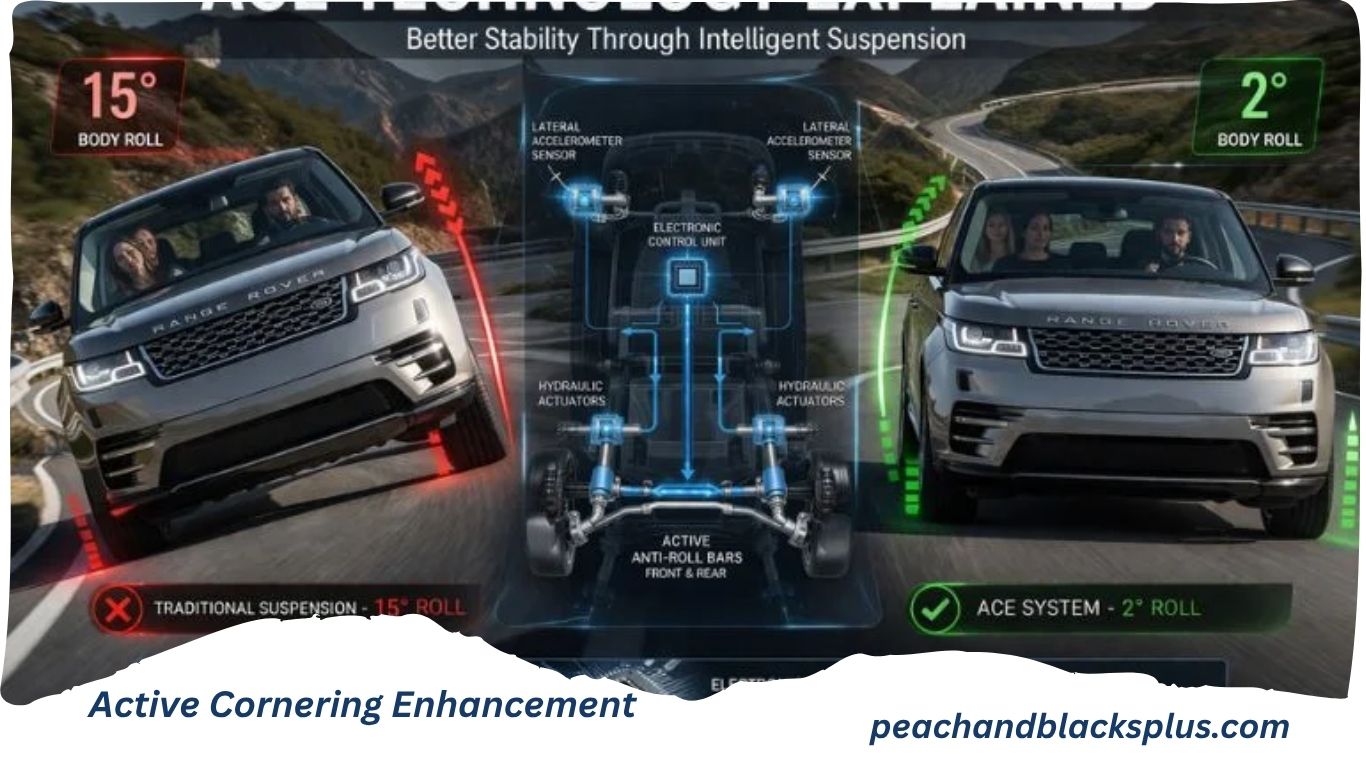
Active Cornering Enhancement: Complete Guide to Better Vehicle Stability and Handling
Modern vehicles are no longer just about powerful engines or comfortable interiors. Today’s drivers expect advanced technologies that improve safety, comfort, and overall driving performance. One of the most impressive innovations developed for this purpose is active cornering enhancement.
Whether you’re driving through winding mountain roads, making a sharp turn in the city, or avoiding an unexpected obstacle on the highway, active cornering enhancement helps your vehicle stay balanced, stable, and easier to control.
Many drivers have heard of systems like Electronic Stability Control (ESC), Anti-lock Braking System (ABS), or Traction Control, but active cornering enhancement is often less understood. Despite that, it plays an important role in improving vehicle dynamics by reducing body roll and helping the suspension adapt during cornering.
This comprehensive guide explains everything you need to know about active cornering enhancement, including how it works, its components, benefits, limitations, maintenance requirements, future developments, and how it compares with other vehicle stability technologies. Along the way, you’ll also find practical insights that go beyond basic explanations to help you understand why this technology continues to influence modern automotive engineering.
What Is Active Cornering Enhancement?
Active cornering enhancement is an intelligent vehicle technology designed to improve handling, stability, and passenger comfort when a vehicle turns or corners.
Unlike traditional suspension systems that react passively to road conditions, active cornering enhancement continuously monitors how the vehicle is moving. Using sensors, electronic controllers, and hydraulic or electric actuators, the system automatically adjusts suspension forces to reduce body roll.
Body roll is the natural leaning motion that occurs when a vehicle enters a turn. Excessive body roll can reduce tire grip, make steering feel less precise, and decrease driver confidence. Active cornering enhancement minimizes this movement, helping the vehicle remain flatter throughout the corner.
The result is:
- Better steering response
- Improved road grip
- Increased vehicle stability
- More comfortable rides
- Better driver confidence

Why Active Cornering Enhancement Was Developed
Vehicle engineers have always faced a difficult challenge.
Drivers want comfortable suspension while driving straight, but they also want firm suspension while taking corners.
Traditional suspension systems force manufacturers to compromise between comfort and handling.
If the suspension is soft:
- Better ride comfort
- More body roll
If the suspension is stiff:
- Better handling
- Rougher ride quality
Active cornering enhancement solves much of this problem by automatically changing suspension behavior only when needed.
This means drivers enjoy:
Also Read:Telemetryczny: Complete Guide to Telemetry Systems, Applications, and Benefits
- Comfortable daily driving
- Improved cornering performance
- Better overall stability
Instead of choosing one advantage over another, the system provides both.
How Active Cornering Enhancement Works
The operation of active cornering enhancement involves multiple systems working together in real time.
Step 1: Vehicle Sensors Collect Information
Numerous sensors monitor vehicle movement hundreds of times every second.
Common sensor data includes:
- Steering angle
- Vehicle speed
- Lateral acceleration
- Wheel speed
- Suspension position
- Yaw rate
- Brake pressure
These sensors constantly inform the system about what the vehicle is doing.
Step 2: Electronic Control Unit Processes Data
The Electronic Control Unit (ECU) acts as the brain of active cornering enhancement.
It calculates:
- How sharp the turn is
- How quickly the driver is steering
- Vehicle weight transfer
- Body roll amount
- Suspension adjustments needed
These calculations occur almost instantly.
Step 3: Hydraulic or Electric Actuators Respond
Once the ECU determines the required correction, actuators adjust the suspension.
Depending on vehicle design, they may:
- Increase anti-roll force
- Reduce suspension travel
- Stiffen one side of the suspension
- Balance vehicle weight
Everything happens automatically without driver input.
Step 4: Vehicle Stays More Stable
Instead of leaning dramatically during turns, the vehicle remains flatter.
Benefits include:
- Better tire contact
- Improved steering accuracy
- Greater driver confidence
- Reduced passenger movement
The entire process repeats continuously throughout every drive.
Main Components of Active Cornering Enhancement
Understanding the system becomes easier by looking at each component individually.
Electronic Control Module
This computer receives information from every sensor and makes split-second decisions.
It is responsible for calculating suspension adjustments before the driver even notices body roll.
Steering Angle Sensor
This sensor measures how much the steering wheel turns.
The sharper the steering input, the more preparation the system makes for cornering.
Yaw Rate Sensor
Yaw refers to the vehicle rotating around its vertical axis.
This sensor helps determine whether the vehicle is turning as expected.
Lateral Acceleration Sensor
This measures side-to-side forces acting on the vehicle during turns.
Higher cornering forces usually require greater suspension adjustments.
Hydraulic Pump or Electric Motor
These components generate the force needed to move the suspension or anti-roll bars.
Modern vehicles increasingly use electric systems because they are more energy efficient.
Active Anti-Roll Bars
Traditional anti-roll bars always provide the same resistance.
Active anti-roll bars change stiffness automatically depending on driving conditions.
This flexibility is one of the biggest improvements offered by active cornering enhancement.
Types of Active Cornering Enhancement Systems
Manufacturers use different designs depending on the vehicle.
Hydraulic Systems
Hydraulic systems use pressurized fluid to create force.
Advantages include:
- High strength
- Smooth operation
- Excellent stability
Disadvantages include:
- More maintenance
- Additional components
- Hydraulic fluid requirements
Electric Systems
Electric motors replace hydraulic pumps.
Benefits include:
- Faster response
- Lower maintenance
- Better fuel efficiency
- Fewer moving parts
Electric systems are becoming increasingly popular in modern vehicles.
Semi-Active Systems
Semi-active suspension adjusts damping but cannot fully control body movement.
It provides noticeable improvements while remaining less expensive than fully active systems.
Fully Active Systems
Fully active suspension actively controls body movement in nearly every driving situation.
These systems represent the highest level of suspension technology currently available.
Benefits of Active Cornering Enhancement
There are many reasons why manufacturers continue investing in this technology.
Improved Vehicle Stability
Keeping the vehicle flatter during turns improves overall balance.
Drivers experience better control in emergency maneuvers and everyday driving.
Better Steering Precision
Reduced body roll allows steering inputs to feel more direct.
Drivers often notice that the vehicle responds exactly as expected.
Increased Tire Grip
Keeping tires in better contact with the road improves traction.
This can shorten stopping distances while cornering and improve safety.
Better Passenger Comfort
Passengers feel less side-to-side movement.
Long trips become more comfortable, especially on winding roads.
Improved Driver Confidence
A stable vehicle encourages smoother driving.
Drivers feel more secure when taking curves at normal highway speeds.
Reduced Driver Fatigue
Vehicles requiring fewer steering corrections reduce workload during long drives.
This can help lower fatigue over extended journeys.
Real-World Driving Situations Where Active Cornering Enhancement Helps
Many drivers only associate this technology with sports cars.
In reality, it benefits almost every type of vehicle.
Highway Curves
Gentle highway bends become smoother with less body movement.
Drivers feel more relaxed at highway speeds.
Emergency Lane Changes
Quick steering corrections become more stable.
The vehicle remains balanced during sudden maneuvers.
Mountain Roads
Repeated corners place significant demands on suspension.
Active cornering enhancement helps maintain predictable handling.
City Driving
Even everyday intersections become smoother as body roll decreases.
Passengers notice fewer sudden side movements.
Towing
Vehicles towing trailers benefit from improved stability during cornering.
This makes towing safer and more comfortable.
Vehicles That Commonly Use Active Cornering Enhancement
Originally, only luxury vehicles offered active cornering enhancement.
Today it appears across multiple vehicle categories.
Common examples include:
- Luxury sedans
- Premium SUVs
- Performance sports cars
- High-end pickup trucks
- Executive crossover vehicles
- Off-road luxury vehicles
Many manufacturers have developed their own versions using different names, but the goal remains the same—improving handling and stability.
Active Cornering Enhancement vs Traditional Suspension
Traditional suspension works well for normal driving but has limitations during aggressive cornering.
| Feature | Traditional Suspension | Active Cornering Enhancement |
| Body Roll | Higher | Much lower |
| Ride Comfort | Fixed | Adaptive |
| Stability | Good | Excellent |
| Steering Response | Standard | Improved |
| Driver Confidence | Good | Higher |
| Cornering Performance | Moderate | Excellent |
| Technology | Mechanical | Electronic + Mechanical |
Active Cornering Enhancement vs Electronic Stability Control
Many people confuse these technologies.
Also Read:TVLIO: 40,000+ Live TV Channels, 120,000+ Movies & Full Review
Electronic Stability Control prevents skidding by applying brakes to individual wheels.
Active cornering enhancement works earlier by improving suspension behavior before instability develops.
Together, they provide greater overall safety.
Active Cornering Enhancement vs Adaptive Suspension
Adaptive suspension mainly changes shock absorber stiffness.
Active cornering enhancement specifically targets body roll during turns.
Many premium vehicles combine both systems for maximum performance.
Does Active Cornering Enhancement Improve Safety?
The simple answer is yes.
Although it cannot prevent every accident, active cornering enhancement contributes to safer driving by improving vehicle control.
Safety improvements include:
- Better emergency handling
- Reduced rollover risk in taller vehicles
- Improved steering response
- Increased tire contact
- Better stability during lane changes
- More predictable cornering
It should always be viewed as a driver assistance technology rather than a replacement for safe driving habits.
Can Active Cornering Enhancement Improve Fuel Efficiency?
The direct fuel savings are usually small.
However, newer electric versions consume less energy than older hydraulic systems.
Indirect benefits may include:
- Reduced tire wear
- Improved vehicle balance
- Better suspension efficiency
- Lower rolling resistance in some situations
Fuel economy improvements depend on vehicle design and driving style.
Common Signs of Active Cornering Enhancement Problems
Like any advanced automotive technology, the system can develop faults over time.
Common warning signs include:
- Suspension warning lights
- Excessive body roll
- Hydraulic fluid leaks
- Uneven ride quality
- Strange suspension noises
- Vehicle leaning during turns
- Reduced steering precision
Ignoring these symptoms can reduce both comfort and safety.
Maintenance Tips
Although active cornering enhancement requires relatively little routine attention, proper maintenance helps ensure long-term reliability.
Recommended practices include:
- Inspect suspension components regularly.
- Check for hydraulic leaks if equipped.
- Replace worn bushings promptly.
- Maintain proper tire pressure.
- Perform wheel alignments as recommended.
- Follow manufacturer service intervals.
- Scan electronic systems if warning lights appear.
Preventive maintenance is usually less expensive than major suspension repairs.
Is Active Cornering Enhancement Worth It?
For many drivers, the answer is yes.
If you frequently drive on highways, winding roads, or carry passengers, the technology offers noticeable improvements.
The biggest advantages include:
- Greater driving confidence
- Better comfort
- Improved stability
- Enhanced handling
- Reduced body roll
Drivers who value safety and premium driving experiences often consider it a worthwhile feature.
The Future of Active Cornering Enhancement
Vehicle technology continues evolving rapidly.
Future versions of active cornering enhancement are expected to become even more intelligent.
Emerging trends include:
Artificial Intelligence Integration
AI may predict vehicle movement before a corner begins.
Instead of reacting, the system could prepare suspension settings in advance.
Camera-Based Road Reading
Advanced cameras may identify curves ahead and adjust suspension before entering the turn.
GPS-Based Prediction
Navigation systems could inform the suspension about upcoming roads.
This predictive capability would further improve comfort and stability.
Electric Active Suspension
Electric actuators are replacing hydraulic systems in many new vehicles.
Benefits include:
- Faster response
- Better reliability
- Lower maintenance
- Improved efficiency
Integration with Autonomous Driving
Self-driving vehicles require extremely stable handling.
Future autonomous systems will likely depend heavily on advanced suspension technologies like active cornering enhancement.
Why Active Cornering Enhancement Matters More Than Ever
Many articles describe active cornering enhancement as simply another suspension feature, but its importance extends much further.
Today’s vehicles are becoming:
- Larger
- Heavier
- Faster
- More technologically advanced
Electric vehicles add significant battery weight, while SUVs continue dominating the market.
Both trends increase the importance of maintaining stability during cornering.
Rather than making suspension permanently stiff, active cornering enhancement allows vehicles to adapt continuously to changing road conditions. This flexibility delivers a driving experience that is both comfortable and controlled.
As more advanced driver assistance systems and autonomous technologies become common, suspension systems will play an even greater role. Reliable handling is essential not only for human drivers but also for automated driving software that depends on predictable vehicle behavior.
In this sense, active cornering enhancement is no longer just a luxury feature. It represents a key part of the broader evolution toward safer, smarter, and more responsive vehicles.
Common Myths About Active Cornering Enhancement
Several misconceptions surround this technology.
Myth 1: It Is Only for Sports Cars
Reality: SUVs, luxury sedans, trucks, and crossovers also benefit significantly.
Myth 2: It Eliminates All Body Roll
Reality: It greatly reduces body roll but cannot completely remove the effects of physics.
Myth 3: It Replaces Safe Driving
Reality: The system assists the driver but cannot overcome excessive speed or unsafe driving behavior.
Myth 4: It Requires Constant Maintenance
Reality: Most systems are designed to be reliable, with maintenance generally limited to routine suspension inspections and manufacturer-recommended service.
Myth 5: It Only Works at High Speeds
Reality: Active cornering enhancement can improve stability during both low-speed city turns and high-speed highway curves.
Also Read:Shani Levni: Complete Guide to the Israeli Multidisciplinary Artist
Should You Look for Active Cornering Enhancement?
If you’re shopping for a new or used vehicle, consider this technology if you:
- Drive long highway distances regularly.
- Live in areas with winding roads.
- Prefer a smoother, more controlled ride.
- Tow trailers or carry heavy loads.
- Value advanced safety and handling features.
- Plan to keep the vehicle for many years.
When evaluating a vehicle, ask whether it includes active cornering enhancement or a similar manufacturer-specific system, and confirm that it has been properly maintained.
Conclusion
Active cornering enhancement has transformed the way modern vehicles handle curves, corners, and sudden steering maneuvers. By intelligently reducing body roll and optimizing suspension performance, it creates a driving experience that feels safer, smoother, and more predictable.
Although originally introduced in premium vehicles, this technology continues expanding into a wider range of cars, SUVs, trucks, and electric vehicles. As automotive engineering advances, active cornering enhancement is expected to become even more sophisticated through artificial intelligence, predictive road scanning, and fully electric suspension systems.
For drivers, the value goes beyond improved performance. The technology increases confidence, enhances passenger comfort, and supports overall vehicle safety without requiring any additional effort behind the wheel. Whether you commute daily, travel long distances, or simply appreciate better handling, active cornering enhancement represents one of the most practical innovations in modern suspension design.
Frequently Asked Questions About Active Cornering Enhancement
Does active cornering enhancement work in rainy weather?
Yes. While it does not increase tire traction on slippery roads, it helps maintain better vehicle balance and stability during turns, complementing systems such as traction control and electronic stability control.
Can active cornering enhancement reduce tire wear?
It may help promote more even tire contact with the road during cornering, which can contribute to more consistent tire wear when combined with proper alignment and tire maintenance.
Is active cornering enhancement available on electric vehicles?
Yes. Many modern electric vehicles use advanced electric suspension technologies that provide functions similar to or more advanced than traditional active cornering enhancement systems.
Will active cornering enhancement affect ride comfort on rough roads?
Most systems are designed to preserve ride comfort during normal driving and become more active primarily when cornering or during dynamic maneuvers.
Can the system be upgraded to a vehicle that did not originally include it?
In most cases, no. Because it relies on integrated sensors, control modules, suspension components, and vehicle software, retrofitting is usually expensive and technically challenging.
Does active cornering enhancement increase maintenance costs?
Routine maintenance costs are generally modest, but repairs can be more expensive than those for a conventional suspension if specialized components need replacement.
Is active cornering enhancement useful for family SUVs?
Yes. Taller vehicles naturally experience more body roll, so this technology can significantly improve stability, comfort, and passenger confidence during everyday driving.
Can active cornering enhancement improve resale value?
Vehicles equipped with advanced handling and safety technologies are often more attractive to buyers, especially in the premium vehicle market, though resale value also depends on factors such as condition, mileage, and demand.