Shani Levni: Artist, Creative Vision, Background, Art Style, and What We Know
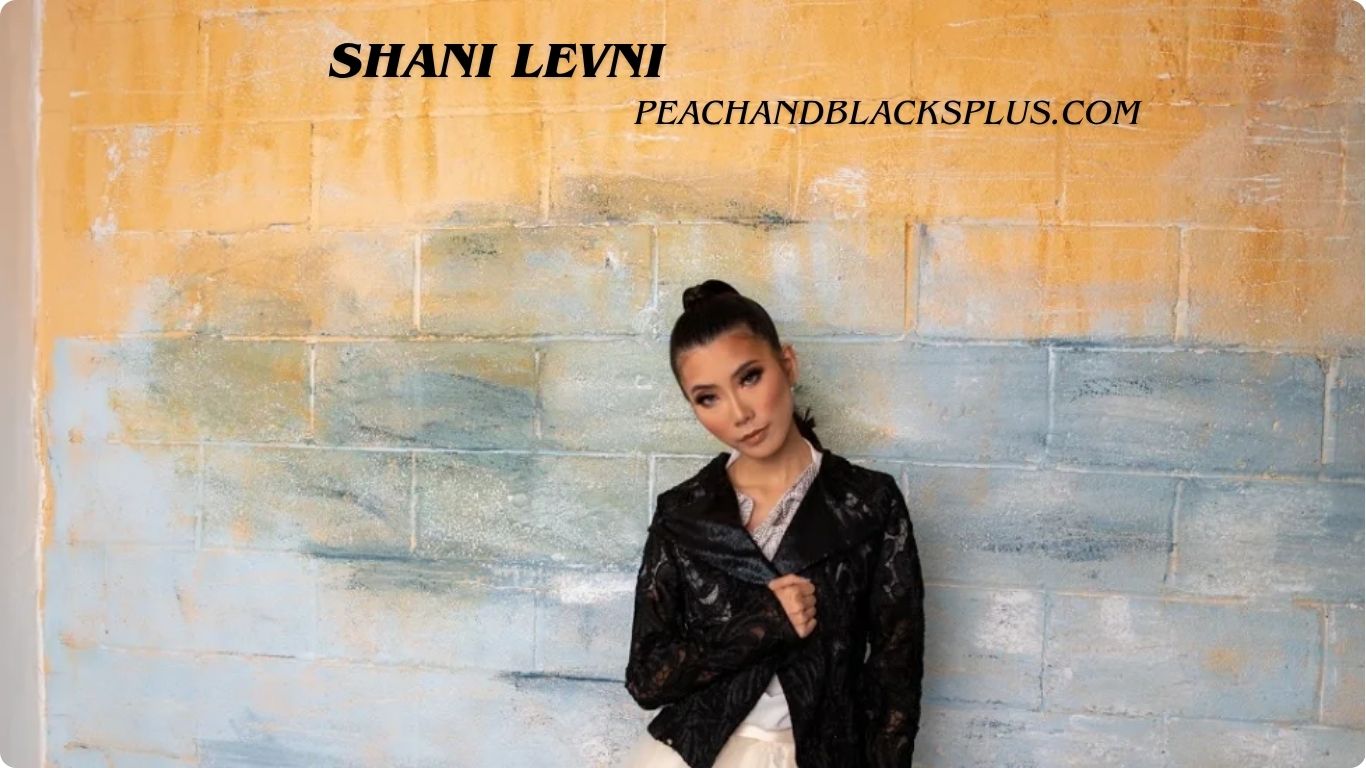
Shani Levni is a name that has attracted growing interest from people searching for information about contemporary art, Israeli artists, painting, creativity, and modern visual expression. Online descriptions commonly present Shani Levni as an Israel-based artist known for creating eye-catching artwork across different categories and exploring ideas through visual creativity.
At the same time, Shani Levni is a good example of how difficult it can be to research an emerging or lesser-known artist through the internet. Search results can contain many descriptions, but repeated information does not always mean that every detail has been independently confirmed. For readers, art lovers, collectors, students, and anyone simply curious about the name, it is important to separate widely repeated descriptions from information that can be confidently established.
This article takes a careful and balanced approach.
Rather than treating every online statement as fact, it looks at Shani Levni through the information commonly associated with her name and examines what makes the subject interesting. It also explains how an artist can build a recognizable identity through painting, visual experimentation, emotional storytelling, and a modern digital presence.
The goal is simple: provide a clear, human-friendly guide to Shani Levni while avoiding unnecessary speculation.
Whether you searched for “shani levni,” “Shani Levni artist,” “Shani Levni paintings,” “Shani Levni art style,” or information about her background, this guide provides a useful starting point.
Who Is Shani Levni?
Shani Levni is generally described online as an Israel-based artist with an interest in visual creativity and painting. Her name has appeared in online discussions and articles focused on contemporary art and creative expression.
The available descriptions suggest that her artistic identity is connected with producing visually engaging paintings and exploring more than one artistic category. This is important because modern artists do not always work inside a single traditional box.
An artist may paint, draw, photograph, create digital compositions, experiment with mixed media, or combine several approaches. Contemporary art has become much more flexible than the traditional idea of an artist simply producing paintings for a gallery wall.

This broader understanding helps explain why people searching for Shani Levni may encounter different descriptions of her creative work.
The central idea is that Shani Levni is associated with artistic expression rather than with one narrowly defined type of artwork.
For someone discovering her name for the first time, the most useful approach is to think of her as part of a wider contemporary creative environment where visual art can include traditional techniques, personal ideas, cultural influences, experimentation, and digital presentation.
Shani Levni and the Interest in Israeli Art
Understanding the interest in Shani Levni also requires some understanding of the wider Israeli art environment.
Israel has a diverse and complex cultural landscape. Artists working there can encounter influences from Jewish traditions, Middle Eastern culture, European artistic movements, Mediterranean life, modern architecture, religion, history, politics, family traditions, and everyday urban experiences.
However, it would be too simple to assume that every Israeli artist creates work about politics or history.
Many artists are interested in much more personal subjects. They may explore beauty, emotions, relationships, nature, identity, memory, daily life, color, movement, or abstract ideas.
This distinction matters when discussing Shani Levni.
An artist’s nationality or location can provide cultural context, but it does not automatically define the meaning of every painting.
The better question is what the artist actually creates, how the work is presented, what visual choices appear repeatedly, and how audiences respond to those choices.
The Meaning Behind the Name Shani Levni
For many people, the first question is simply who Shani Levni is.
That question becomes more complicated when online information is limited.
A person can have a real creative career while still having a relatively small public footprint. Not every artist has extensive museum archives, major newspaper profiles, academic books, or large databases dedicated to their work.
This is especially common with independent artists.
An artist may spend years developing a body of work before receiving widespread attention. Some artists also prefer smaller exhibitions, private commissions, social media, studio work, or local creative communities instead of building a large celebrity profile.
Therefore, limited search results should not automatically be interpreted as evidence that an artist is unimportant.
At the same time, limited information means readers should be careful about accepting highly specific claims without supporting evidence.
That balance is especially important when researching Shani Levni.
Shani Levni’s Reported Birth Information
Some online descriptions identify Shani Levni as being born on April 15.
Other pages provide additional biographical details, but not all of those details have strong independent documentation.
For that reason, it is better to treat specific personal information cautiously unless it can be confirmed through a reliable first-party biography, recognized institution, exhibition record, or other authoritative source.
This is not unusual in the art world.
Many emerging artists have incomplete biographies online. Their work may be easier to find than their personal history.
From an editorial perspective, this distinction is important. A professional article should not turn an uncertain internet claim into a confirmed fact simply because several websites repeat it.
What Kind of Artist Is Shani Levni?
The descriptions associated with Shani Levni generally place her within the world of visual art, especially painting and creative image-making.
The phrase “multidisciplinary artist” is often used in modern art because artists frequently work across several forms.
A contemporary artist may begin with a traditional canvas and later explore photography, digital design, drawing, sculpture, collage, installation, or performance.
This flexibility allows artists to choose the medium that best communicates an idea.
For Shani Levni, the available online descriptions emphasize visually engaging artwork and experimentation across artistic categories.
This suggests an approach where the visual experience is important.
An eye-catching painting can attract a viewer immediately, but good visual art often has another layer beneath the first impression.
Color can create mood.
Texture can create depth.
Composition can direct attention.
Shapes can create movement.
Empty space can create silence.
A familiar object can trigger memory.
These elements allow an artwork to communicate without relying entirely on words.
Understanding Shani Levni’s Artistic Appeal
One reason an artist can attract online attention is the ability to make work that people remember.
In a crowded visual environment, this is not easy.
People see thousands of images every day through websites, phones, advertisements, social media, streaming platforms, and digital publications.
A painting therefore competes with an enormous amount of visual information.
An eye-catching artwork has a better chance of making someone pause.
But visual appeal alone does not create a lasting artistic identity.
The stronger combination is visual attraction plus emotional or intellectual meaning.
This is where the idea of Shani Levni becomes interesting.
If her work is presented through multiple artistic categories, the common thread may not be one particular medium. Instead, it may be a commitment to visual communication.
The medium can change.
The creative purpose remains.
Shani Levni Paintings and Visual Expression
When people search for Shani Levni paintings, they are often looking for a simple answer: what do her paintings look like?
The challenge is that painting is a broad category.
A painting can be realistic, abstract, symbolic, minimalist, expressive, decorative, conceptual, or somewhere between these styles.
It can focus on people, nature, objects, architecture, emotion, imagination, or color itself.
For this reason, describing an artist only with a single style label can sometimes be misleading.
A better way to understand paintings is to examine several elements.
Color
Color is one of the first things viewers notice.
Artists can use bright colors to create energy, darker colors to create seriousness, soft colors to create calmness, or contrasting colors to create visual tension.
The emotional effect of color can also change depending on the surrounding colors.
A small bright area can become the focal point of an otherwise quiet painting.
Composition
Composition refers to how the elements of a painting are arranged.
Where does the eye go first?
Is the subject centered?
Is there movement?
Does the artwork feel balanced or intentionally uneven?
These choices can affect how viewers experience an image.
Texture
Texture adds another dimension to painting.
A smooth surface can feel calm and controlled.
Thick paint can feel physical and energetic.
Layered materials can create complexity.
Even when viewers cannot physically touch a painting, they can often sense texture visually.
Subject
The subject gives viewers an entry point.
A recognizable person, place, object, or landscape can make a painting easier to approach.
Abstract subjects can create a different experience because viewers may need to decide what the image means for themselves.
Emotion
Perhaps the most important element is emotional response.
A technically impressive painting may not stay in someone’s mind.
A simple painting that creates a strong feeling may remain memorable for years.
This is one reason modern art cannot always be judged only by technical realism.
Why Eye-Catching Art Matters
The description of Shani Levni as an artist known for eye-catching paintings is meaningful because attention is an important part of visual communication.
An artwork does not have to be loud to be noticeable.
Sometimes an unusual composition attracts attention.
Sometimes a surprising color combination does it.
Sometimes the subject creates curiosity.
In other cases, the artwork is visually simple but emotionally powerful.
Eye-catching art creates an invitation.
It tells the viewer, “Look closer.”
That first moment can lead to deeper engagement.
This is especially important in today’s digital environment.
A painting may be displayed in a gallery, but it may also be photographed and shared online.
The digital image then becomes another way for audiences to encounter the work.
The Difference Between Attractive Art and Meaningful Art
It is useful to make a distinction between attractive art and meaningful art.
Attractive art creates immediate visual pleasure.
Meaningful art can create a longer conversation.
The best artwork can do both.
A beautiful painting may make someone stop scrolling.
A thoughtful idea may make them keep looking.
A personal story may make them remember the work later.
This combination can help explain why artists with strong visual identities can gradually build loyal audiences.
For Shani Levni, the online descriptions of her work point toward an interest in visual creativity rather than simply producing generic decorative images.
That distinction matters.
Art can be visually appealing while still carrying ideas, feelings, cultural references, or personal experiences.
Possible Themes in Contemporary Artistic Practice
When discussing an artist whose public documentation is limited, it is important not to invent a list of themes and present it as confirmed biography.
Instead, we can examine the themes that commonly matter in contemporary visual art and consider how they may help readers interpret an artist’s work.
Identity is one such theme.
Artists often ask questions about who they are, where they come from, and how their experiences shape the way they see the world.
Memory is another.
A painting can preserve a feeling or moment even when the original experience has disappeared.
Nature can also become an artistic subject.
Landscapes, plants, skies, water, and natural forms can be used to explore beauty, change, time, and emotion.
Another common theme is everyday life.
Artists can transform ordinary scenes into something worth examining.
This is one of the strengths of painting: it can make viewers notice things they normally overlook.
Shani Levni and the Role of Creativity
Creativity is not simply the ability to make something beautiful.
It is the ability to make connections.
An artist may connect color with emotion, shape with movement, memory with an object, or personal experience with a larger cultural idea.
This is why artistic creativity can be difficult to measure.
There is no single formula for deciding whether something is creative.
Instead, creativity often appears through choices.
Why was this color selected?
Why is the subject positioned here?
Why is the background empty?
Why does the painting use rough texture?
Why does the artist repeat a particular shape?
These questions encourage viewers to move beyond simply asking whether they like a painting.
How to Look at a Shani Levni Artwork
If you encounter artwork attributed to Shani Levni, there is a simple way to examine it.
First, look at the painting without trying to explain it.
Notice your immediate reaction.
Does it feel calm?
Energetic?
Sad?
Warm?
Strange?
Familiar?
Then examine the colors.
Which color attracts your attention first?
Next, look at the composition.
Where does your eye travel?
After that, study the details.
Look for repeated forms, textures, lines, symbols, or changes in the surface.
Finally, ask what the artwork makes you think about.
There is no requirement to reach the same interpretation as another viewer.
Art can produce different meanings for different people.
Why Interpretation Matters
One of the most interesting parts of visual art is that interpretation does not always have one correct answer.
An artist may have a specific intention, but viewers bring their own experiences to the work.
Two people can look at the same painting and feel completely different emotions.
One person may see loneliness.
Another may see peace.
A third may simply appreciate the color.
All three responses can be valuable.
This does not mean every interpretation is equally supported by the artwork. Careful interpretation should still consider visible details and available context.
But personal response is an important part of the art experience.
Shani Levni in the Digital Age
The modern art world is no longer limited to galleries and museums.
Artists can reach audiences through websites, social platforms, online portfolios, digital exhibitions, interviews, and creative communities.
This has changed the relationship between artists and audiences.
In the past, a person might need to travel to a gallery to see an artist’s work.
Today, an artwork can reach someone thousands of miles away within seconds.
For an artist such as Shani Levni, online visibility can therefore play an important role in discovery.
Someone in the United States can search for an Israel-based artist without ever having visited Israel.
A student can discover a painting through a search engine.
A collector can encounter an artist through a digital portfolio.
A writer can research an artist from another country.
The internet has made the art world more accessible.
The Problem With Repeated Online Information
Digital visibility has an important weakness.
Once a claim appears online, other websites may repeat it.
Eventually, readers can mistake repetition for verification.
This is one of the biggest challenges when researching lesser-known public figures and artists.
For Shani Levni, this issue is especially relevant because several online articles provide detailed biographical descriptions, while other sources question how easily those details can be independently verified.
A responsible reader should therefore ask:
Where did this information originate?
Is there a primary source?
Does a recognized institution confirm it?
Is there an exhibition catalog?
Is there a direct artist statement?
Are multiple independent sources reporting the same information?
These questions are useful for researching any artist.
Why E-E-A-T Matters When Researching Artists
Google’s quality principles emphasize experience, expertise, authoritativeness, and trustworthiness.
These ideas are particularly important for biographical content.
A high-quality article should not pretend to know something that cannot be established.
It should distinguish between:
Confirmed information.
Reported information.
Reasonable interpretation.
Unverified claims.
This approach does not make an article weaker.
It makes the article more trustworthy.
In fact, acknowledging uncertainty can be a sign of strong research.
Shani Levni and the Importance of Primary Sources
For anyone researching Shani Levni in greater depth, primary sources should receive the most attention.
A primary source could include an official artist website, a direct artist statement, a verified gallery profile, an exhibition catalog, a museum record, an interview with the artist, or another authoritative document.
Secondary sources can still be useful.
They can provide context, criticism, reviews, and summaries.
However, they should not automatically be treated as proof of every personal or professional detail.
This is especially important when an artist has a relatively small public archive.
How Emerging Artists Build Recognition
An artist’s career can grow slowly.
Recognition may begin with a small exhibition.
Then come local collectors.
Then online visibility.
Then collaborations.
Then larger exhibitions.
The process is different for every artist.
Some artists become famous quickly because of a major event.
Others build audiences over many years.
Some become well known among collectors but remain unknown to the general public.
Others gain a large online audience without having a major institutional presence.
This means popularity and artistic importance are not always the same thing.
An artist does not need to be a household name to produce meaningful work.
What Makes an Artist Memorable?
Several factors can make an artist memorable.
A recognizable visual language is one.
A strong emotional connection is another.
Consistency also matters.
Artists who repeatedly explore questions or visual ideas can develop a recognizable identity over time.
Authenticity matters as well.
Audiences often respond to work that feels personal rather than manufactured.
Finally, presentation matters.
A strong artwork needs context.
Titles, descriptions, exhibitions, interviews, and photography can all influence how audiences understand the work.
The Broader Value of Painting
Painting remains powerful even in a world dominated by digital images.
A physical painting has a presence that a screen cannot fully reproduce.
The scale is different.
The surface is different.
The lighting changes how the work looks.
Brush marks can become visible.
Small imperfections become part of the object.
The viewer can stand close and then step back.
This physical relationship gives painting a unique role in contemporary art.
For artists working today, traditional painting is not necessarily old-fashioned.
It can be a starting point for experimentation.
Why People Search for Shani Levni
Search interest around Shani Levni may come from several different audiences.
Art enthusiasts may want to understand her work.
Readers may want a biography.
Students may be researching contemporary artists.
Collectors may want to learn about an emerging creative figure.
Others may simply have encountered the name online and want to know who it refers to.
Each audience has a different question.
That is why a useful guide should not provide only a short biography.
It should explain the wider context.
Is Shani Levni a Famous Artist?
The word “famous” is difficult to measure.
There is no universal point at which an artist becomes famous.
An artist may be recognized in a particular community while remaining unfamiliar to the general public.
Based on the limited publicly available material, it would be more accurate to describe Shani Levni as an artist who has attracted online interest rather than making unsupported claims about worldwide fame.
This distinction is important.
Good art writing should describe recognition carefully.
What Can We Learn From Shani Levni?
Even when an artist’s complete biography is not widely documented, the subject can teach us something about modern creativity.
The first lesson is that artists can work across boundaries.
Painting does not have to remain separate from other creative forms.
The second lesson is that online visibility can introduce artists to international audiences.
The third is that visual appeal and deeper meaning can work together.
The fourth is that readers should evaluate information carefully.
And the fifth is that artistic identity can develop over time.
An artist does not have to have every part of a career defined from the beginning.
The Future of Shani Levni’s Artistic Identity
The future of any emerging artist is difficult to predict.
New exhibitions, collaborations, publications, digital projects, or changes in artistic direction can reshape public understanding.
Shani Levni may continue developing within painting or explore additional forms of creative expression.
The important point is that an artist’s identity should be allowed to evolve.
A creative career is not a static biography.
It is a process.
Artists learn.
They experiment.
They reject old approaches.
They discover new ones.
They respond to changing technology and culture.
They also change as people.
That development is part of what makes following an artist interesting.
Why Readers Should Avoid Unverified Personal Claims
Celebrity-style biographies often attract clicks because personal details generate curiosity.
But curiosity should not replace accuracy.
If a detail about Shani Levni’s private life cannot be confirmed through a reliable source, it should not be presented as fact.
This is particularly important for information involving relationships, family members, private addresses, finances, or other sensitive subjects.
A professional article should focus on information relevant to the artist’s public creative work.
That approach respects both the reader and the person being discussed.
Shani Levni as a Search Topic
From an SEO perspective, “shani levni” is a specific name-based keyword.
People searching the term are likely to have informational intent.
They may want to know:
Who is Shani Levni?
Is Shani Levni an artist?
Where is Shani Levni from?
What kind of art does Shani Levni create?
What are Shani Levni paintings like?
What is known about Shani Levni’s background?
Where can people find Shani Levni artwork?
A strong article should answer these questions naturally rather than repeating the keyword excessively.
Keyword stuffing can make content uncomfortable to read and can reduce its usefulness.
The better strategy is semantic coverage.
That means using related terms such as Israeli artist, contemporary art, paintings, visual art, creative expression, artistic style, artwork, painting techniques, art career, and modern artist where they genuinely fit.
Why Natural Keyword Use Is Better
The exact keyword “shani levni” should appear where it makes sense.
It belongs in the title.
It can appear in major headings.
It should occur naturally in the introduction.
It can be used when discussing the artist’s career or artwork.
But it does not need to appear in every paragraph.
Search engines have become better at understanding topics rather than simply counting exact keyword repetitions.
A useful article should therefore focus first on people.
If the reader learns something valuable, the SEO goal becomes much easier to achieve.
Frequently Asked Questions About Shani Levni
Who is Shani Levni?
Shani Levni is generally described online as an Israel-based artist associated with visual art and painting. Public information about her is relatively limited, so readers should distinguish between commonly repeated descriptions and independently verified biographical facts.
What is Shani Levni known for?
Online descriptions commonly associate Shani Levni with eye-catching paintings and creative work across multiple artistic categories. The exact scope of her professional work should be checked against reliable primary or institutional sources as more information becomes available.
Is Shani Levni an Israeli artist?
She is commonly described online as an Israel-based or Israeli artist. This description forms the basic context for much of the online discussion surrounding her name.
When was Shani Levni born?
Some online sources state that Shani Levni was born on April 15, but detailed biographical information should be independently verified before being treated as definitive.
What type of paintings does Shani Levni create?
Available descriptions characterize her as an artist working across different categories rather than restricting her to one simple painting style. Viewers interested in her work should examine individual artworks rather than assuming that every piece follows the same technique.
Why is Shani Levni attracting online attention?
Interest appears to come from curiosity about her identity as an artist, her paintings, her creative approach, and the limited amount of consolidated information available online.
Can I buy Shani Levni artwork?
Availability can change, and not every artwork discussed online is necessarily offered for sale. Potential buyers should look for a verified artist, gallery, exhibition, or official sales channel before making a purchase.
Is Shani Levni a contemporary artist?
The online descriptions surrounding her generally place her within a modern or contemporary artistic context. The term is useful because her work is discussed in relation to present-day visual creativity.
What makes Shani Levni’s work interesting?
The main point of interest is the combination of visual appeal and creative experimentation associated with her artistic identity. Her work also raises broader questions about how independent artists build recognition in the digital era.
Where can I learn more about Shani Levni?
The best sources are direct artist channels, verified exhibition pages, established galleries, museum records, interviews, and reputable art publications. These sources are more useful than websites that simply repeat the same biography.
Is every biography of Shani Levni online reliable?
No. Some online biographies contain detailed claims that are difficult to independently verify. Readers should compare sources and give priority to primary and authoritative material.
Does limited information mean Shani Levni is not a real artist?
Not necessarily. Many artists have limited online documentation, especially independent and emerging artists. Lack of extensive internet coverage should not automatically be interpreted as evidence that someone does not have a genuine creative practice.
Why are artists sometimes difficult to research online?
Artists may have limited media coverage, small exhibition histories, private portfolios, changing websites, or little institutional documentation. Search engines can also surface pages that repeat information without adding independent evidence.
How should I evaluate information about Shani Levni?
Look for the original source of each major claim. Give greater weight to official artist information, recognized institutions, galleries, exhibition catalogs, interviews, and established publications.
Can Shani Levni’s artistic style change over time?
Yes. Artists frequently change their techniques and subjects as their careers develop. A future body of work may look very different from earlier work.
Why is painting still important today?
Painting provides a physical and visual experience that remains powerful even in a digital world. Its surface, scale, texture, and material qualities offer something different from an image viewed on a phone or computer.
What should I look for when viewing a Shani Levni painting?
Start with your immediate reaction. Then examine color, composition, texture, subject, balance, and visual details. Finally, consider what ideas or emotions the work creates for you.
Can one painting have multiple meanings?
Yes. Art can support different interpretations because viewers bring their own memories, experiences, and perspectives. A strong interpretation should still pay attention to the actual visual evidence in the artwork.
Final Thoughts on Shani Levni
Shani Levni is an interesting search topic because it sits at the intersection of contemporary art, digital discovery, and the challenge of researching emerging creative figures.
She is commonly described as an Israel-based artist known for creating visually engaging paintings and exploring different categories of artistic expression. That basic description provides a starting point, but it does not tell the whole story.
The more important question is how her artistic identity develops and how audiences engage with her work.
Modern artists operate in a very different environment from artists of previous generations. A painter can reach people through a gallery, an exhibition, an online portfolio, social media, a digital publication, or a simple image shared between friends.
That creates exciting opportunities, but it also creates challenges.
Information can spread quickly.
Unverified claims can spread just as quickly.
For this reason, researching Shani Levni requires both curiosity and caution.
Readers should enjoy the art, explore the creative ideas, and remain open to new information while checking important biographical claims against reliable sources.
Ultimately, the value of an artist is not determined only by how many search results appear beside their name.
Art is about communication.
It is about observation.
It is about emotion.
It is about asking questions that cannot always be answered with a sentence.
If Shani Levni continues developing her artistic practice and building a larger public record, future exhibitions, publications, interviews, and verified artist materials may provide a clearer picture of her career.
For now, the most responsible way to understand Shani Levni is to recognize her as an artist associated with contemporary visual creativity while remaining careful about biographical details that are not independently established.
That approach creates something more valuable than a simple internet biography: a thoughtful, accurate, and human explanation of why an artist can capture attention in the first place.